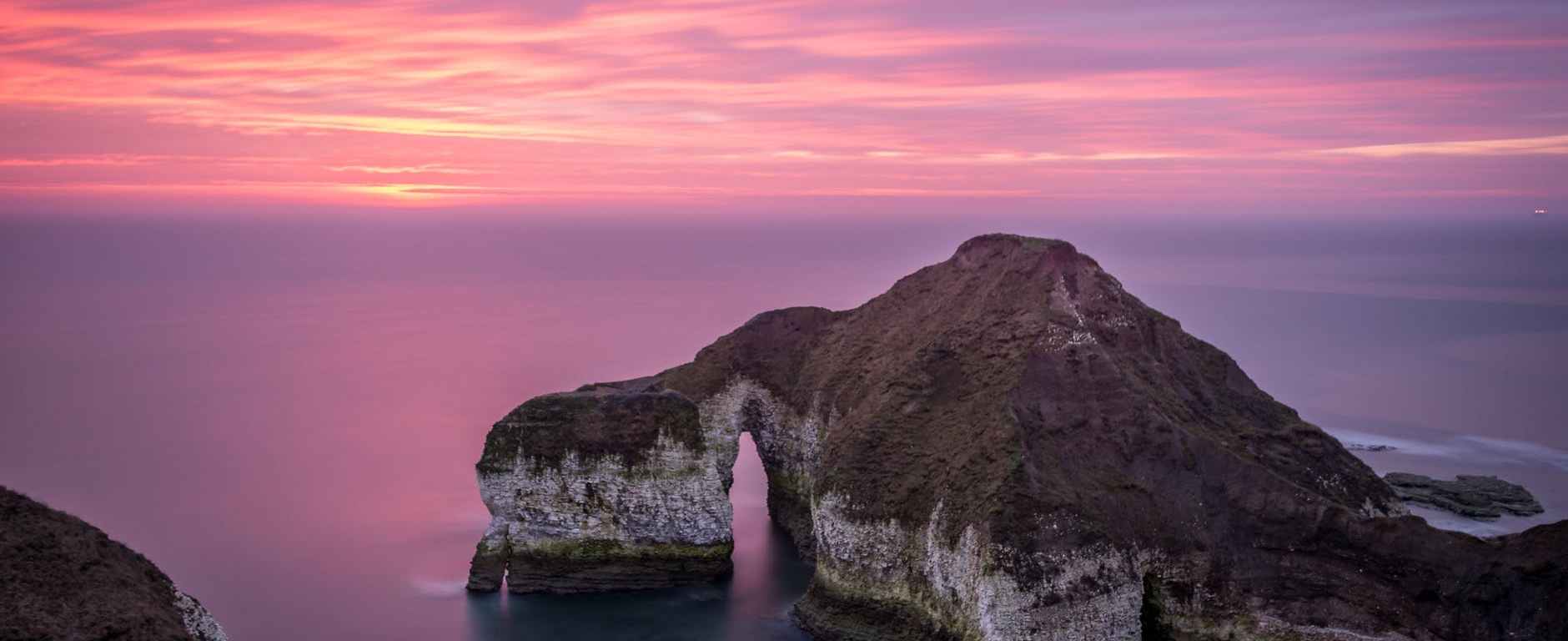
Shortly after their discovery in the 18th Century, the contemporary naturalist and habitual alchemist Robert Crumple described the Liver Islands as ‘a place so infertile, inaccessible and diseased that it should have sent a clear message to any willing European settler not to bother’. But, bother they did and today it is one of the few surviving territorial relics of the British Empire.
Crumple visited the Islands in 1783, staying two weeks before eventually succumbing to the dysentery he contracted there. However, the bloodied reams of his diary entries give us fascinating insight into what the islands were like when the British began to settle.
‘The days on the Liver Islands are hot and long, and shade seems to elude you as the trees fall sporadically about the place robbing you of any refuge from the sun. The wildlife here forms two coherent groups. There are the aggressive and belligerent types, insects mostly, similar to their English counterparts, such as the wasp or spider, but magnified to such terrible extremes in both their size and their propensity to cause harm. Then there is the other group who appear so docile and slothful that their very existence breeds contempt in all those who set eyes upon them. There is one bird, the ‘Wikiwiki’ as the natives have christened it, that is both flightless and sightless by birth. It lives its days as a grotesque ball of fat rolling into its food seemingly by chance and causing havoc by knocking over the settler’s tents. If the animal were to have one redeeming quality then that would be on the dinner table but I am told its flesh is so corrosive to the stomach that is has caused many a man to die in fits of prolonged vomiting and seizure.’
Crumple’s contempt for the Liver Islands has not done much to tarnish his reputation among its current populace however, as he is now the Territory’s official laureate and a statue of him resides in the dysentery wing of the islands’ hospital. Yet, despite these accolades, the person most treasured in the Territory is the man who discovered it.
In 1781, the dishonourably discharged English Admiral Sir Percy Orangetree ran aground upon the largest island of a small pacific archipelago believing it all to be a land coloured patch of ocean. Upon realising his discovery, he promptly named the islands after his favourite part of a chicken. After being rescued a year later he quickly organised a second expedition to the islands putting together an extensive cargo manifest. This manifest can still be seen in the Liver Island ‘Museum of National Hubris’ located in the capital of St. Thomas and makes interesting reading. Here are just some of the things Orangetree took with him:
“134 Whale Bone Combs
1304 Crumpets
1 Flag (British)
6043 Limes
6044 Lime Slicers
3 Tons Oats (chunky kind)
6 Nieces
30 Slaves
15 Lutes (for talented Slaves)
15 Maracas (for less talented Slaves)
Some Wood (for houses)
29 Boxes of Miscellaneous Whale Bones (possibly for making into more combs)”
The 6 Nieces Orangetree took with him are an integral part of the islands’ history. The women were the daughters of Percy’s sister and had all lived at Orangetree’s country estate since the death of their parents during their childhood. At the time, they were famously know as the ‘Summer Women’, with each one named after a month from March to August (Percy’s sister also had 6 other children who were named after the autumn and winter months, but they all died young and in ways fitting with their nomenclature). The ‘Summer Women’ were a vastly intelligent and artistic bunch who produced novels to rival those of the Brontës. They were famed and highly regarded but Orangetree loathed this independent streak in his nieces fearing it would lead to them living lives of promiscuity and disgrace. So, in 1782, he forced all six of them to accompany him on his return to the Liver Islands. There, he hoped, these girls would lead prim and proper lives and write fewer classic novels.
However, ironically the women are now the direct ancestors of the islands’ entire population (No other female settlers ever came to the island and the native female population were all killed in a botched baptismal by missionaries in 1784). The Islands’ first colonial settlement, Fort Monogamy, was quickly usurped by the women and renamed Polygamy Town. August Orangetree reportedly had 15 husbands, 6 of whom were native chieftains. Their Uncle, angered by this disobedience, eventually had them executed in September 1788, when they were all killed by being force fed Wikiwiki bird meat.

Despite literally mothering the island, the Summer Women are now barely remembered by the locals. A small memorial plaque exists on the spot of their execution in capital of St Thomas, but is badly maintained and most people just think that it is some kind of public calendar. In stark contrast, Percy Orangetree now has a giant statue overlooking the marina in St. Thomas and on the site of Polygamy Town, burnt down in 1787 by a fire caused by unsupervised erotic candles, is now a family planning clinic.
From turbulent beginnings, the Liver Islands experienced very little in the way of events after those fledgling years. In the 19th century, it was planned to be used as a penal colony for criminals. However, due to the Islands’ scientifically unusual wind patterns (wind seems to blow very strongly towards the sea all along the coastline) the prison ships were unable to get to the port and the idea was soon abandoned.
In World War 2 (the second of the world wars) the islands escaped invasion from the Japanese on account of them not being aware of their existence. Even if they had have known, due to the islands’ complete lack of natural resources and highly non-strategic location, it is doubtful that they would have mounted an invasion.
Today, the Islanders seem proud of their relatively mundane history post discovery. According to a recent interview in The New American Journal of Small Island Studies, the Island’s governor, John Orangetreeson, revels in it.
“People don’t come to the Liver Islands for the history. That’s why we shut down the ‘Museum of Archaeology and Native Life’. People want the hot weather and good times. Nothing more.”
When asked in the same interview about this thought process leading to further marginalisation of the Liver Islands’ Native population, John Orangetreeson responded with:
“What Native Population?”
The Liver Island natives have suffered tremendously since the arrival of the European Settlers. A recent online poll on http://www.rhinorankings.com has voted them the second most disenfranchised group in the world coming closely behind white males. Little is known about native life before the islands became a colony. It is said that the indigenous islanders had a rich oral tradition but the islands’ only real source of food, the Pōhaku Nut (or ‘bastard fruit’ as the settlers used to call them), is known to seriously debilitate the use of a person’s vocal chords. So for the native Islanders it was a simple choice of starve or forget.
Archaeological evidence is scarce too. After the closure of the ‘Museum of Archaeology and Native Life’ the museum’s artefacts were destroyed by government officials in a misguided recycling initiative. It is thought that the majority of the islands’ toilet paper now consists of the malformed and reshaped fabrics of once sacred tribal robes. The only surviving archaeological materials are those that was taken to be displayed in the British Museum back in the 19th century. However, these items are currently languishing in storage due to a previous museum director finding them ‘too boring’ to be on exhibit. In 2014, when asked to comment on this lack of care for the artefacts, the museum responded using the medium of a tweet:

The government of the Liver Islands have yet to reply to this tweet with a tweet of their own.
All this lack of history, twined with the present day discrimination they face, has presented the native islanders with a fundamental crisis of identity. They cannot determine a sense of being from either past or present. And, their future, along with the rest of the islanders, looks even more precarious as the threat of climate change is becoming ever more malign. In fact, the scientific community is currently baffled as to why the archipelago has not started to sink due to rising sea levels. Local geologist Jennifer Orangetreeson puts it down to the usual buoyancy of the islands’ soil stating that she has used it on several occasions to create makeshift water wings for her daughter’s swimming class. However, some believe that islands have in fact started to sink and that the evidence is being covered up by the current administration. Recent government schemes and advertising campaigns, such as Drive a Boat to Work Day or Free Wellingtons for Wet Footed Children, or Stilts – Not just for a Circus Performer’s House have only fanned the flames of this conspiracy.
Whatever the truth, the British Government has put into place the beginnings of a contingency plan in case the worst does occur. The plan, monikered “Operation Dice Roll”, will involve the evacuation of all 27 of the islands’ population in the most efficient way possible. They will be placed in the islands’ only seaworthy vessel, a hippo shaped tourist hovercraft that periodically opens its mouth to makes animal noises through a solitary rusting speaker, and sail around aimlessly until intercepted in happen-chance by a passing ship. Eventually the refugees make their way to the U.K where a small part of Watford Gap Services will be transformed into Liver Island sovereign territory. And, when that day comes, in a cruel nautical irony, the very sea which gave birth to Britain’s empire, will swallow up one of its last remaining parts like a hungry street dog perusing the vestiges of an abandoned hospital morgue.
The island seems doomed to be absent from minds and barely able to become anything more than a strange curio or lean nugget of trivia to be buzzfed and digested in an act of extreme transience. However, in a ray of pure concentrated hope, there or those who seek to change this state affairs. Maverick independent creative agency ‘S-Curve’ have recently been hired to activate an holistic re-branding of the islands’ image and make it a viral trend within the public consciousness (their words). Currently, their team of young creatives are focused on styling the Liver Islands as an optimal tourist destination for budget restricted millennials keen to highlight the favourable currency conversion. The Liver island currency has depreciated tremendously due to the stark decline in demand for its only major export. The commodity in question is a collection of flotsam toy dolls, that simulate the defecation of real life human babies, found by beachcombers back in the 1990s. A legal technicality allowed the Liver Islands to keep the shipwrecked goods and they have being selling them ever since. The Islands’ Trade Minister James Oragnetreeson lamented this state of affairs in a recent interview with the prominent economic weekly The New Robber Baron:
“People no longer want dolls that shit themselves. They are no longer realists. I fear we have a generation now that want to stay in the warmth of the chrysalis for fear of getting their wings dirty.“
But there are those who doubt the islands’ capacity to accommodate its lofty ambitions to style itself as a tourist destination for the young. The island has a poor infrastructure with a limited public transport system and a severe lack of amenities.
“The swing is broken”, exclaimed one exasperated resident on social media. “When will the government fix the swing?”
The Liver Islands Tyre Swing is the Territory’s only public recreational facility and, as of writing, holds a modest rating on TripAdvisor. However, after enduring sustained periods of rhythmic exuberance it has disintegrated to the point of being no more than a husk of wire and is reportedly no longer fun to swing on.
Perhaps this swing is a fitting metaphor for the Liver Islands’ current situation. A synthetic rubbery melancholy, held in place and awaiting the agency of others so it can become in some way relevant again. And, is it troubling or humbling that we still can return to the words of Robert Crumple to best encapsulate the islands’ essence.
“At night, when the sky is cloudless and laid bare, one could be forgiven for thinking this place was a place of great majesty, as they witnessed the endless multitude of stars shine down from the firmament to glisten softly against the sea. But, as soon as one began to gasp at the beauty of God’s creation, he would, in that very same breath, inhale the putrid air that permeates throughout this grotesque cradle of clay. He would then realise that this place is a foul and decrepit land whose swampy soil is barely able to hold up the flagpole placed by those wishing to govern it.”
And that very same extract is engraved in its entirety on a plaque outside the governor’s palace.
 The Content Cottage Industry